


Understanding DVC Resale Prices
DVC resale prices are not uniform. They vary significantly by resort, contract size, use year, point availability, and broader market conditions. If you look at a page of resale listings without understanding what drives those prices, the variation can seem arbitrary. It isn't. Each factor that influences price is doing something specific, and once you understand the logic, you can evaluate listings much more accurately and make offers that reflect what you're actually getting.
We've helped buyers and sellers navigate DVC pricing for years, and the questions we hear most often come down to the same underlying confusion: why does this contract cost more than that one when they look similar? This guide walks through each pricing factor in plain terms so you can answer that question yourself.
Resort Location Is the Biggest Driver
The home resort is the most significant determinant of per-point price in the DVC resale market. This makes intuitive sense once you understand what the home resort actually gives you: 11-month priority booking access. At resorts where demand is high and inventory is limited, that 11-month advantage is genuinely valuable. At resorts where demand is moderate and rooms are more readily available at the 7-month window, the priority advantage matters less to buyers.
Beach Club Villas consistently commands a premium because its location gives owners walking distance access to EPCOT and Hollywood Studios from one of the most beautiful resort pools on property. Polynesian Villas carries a premium because of Magic Kingdom monorail access and the iconic Polynesian setting. Grand Californian is the highest-priced property in the system because it's the only DVC resort at Disneyland and has a private park entrance into Disney California Adventure.
At the other end of the price range, Saratoga Springs and Old Key West offer strong value per point. They're spacious, well-maintained resorts with a lot to offer. But they don't have the location premium of the parks-adjacent properties, and their larger room inventories mean the 11-month window is less competitively essential than it is at smaller, higher-demand resorts.
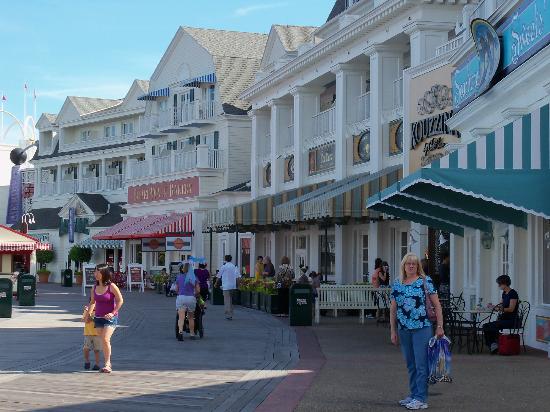
Mid-range resorts like Animal Kingdom Villas, Wilderness Lodge, and BoardWalk sit between these extremes. Their pricing reflects a combination of location, theming, amenity quality, and booking demand at each specific property.
You can compare current asking prices across all resorts on our listings page.
Contract Size and the Small-Contract Premium
Smaller contracts, typically under 100 points, often trade at a slightly higher per-point price than larger contracts at the same resort. This isn't intuitive at first, but the reason is straightforward: demand for smaller contracts outpaces supply.
Many DVC buyers are either first-time owners who want an affordable entry point into the system, or existing owners who want to add a modest number of points to an existing membership. Both groups are looking for contracts in the 50 to 100 point range. That demand is concentrated in a category where inventory is relatively limited, because most DVC contracts were originally purchased in larger sizes.
Larger contracts, by contrast, require more capital from the buyer, which naturally narrows the pool of interested purchasers. Sellers of 250 or 300 point contracts sometimes need to price more competitively to attract offers. The per-point premium on small contracts rarely exceeds $5 to $15 per point, but it's consistently observable across the market.
Point Availability: Loaded Contracts vs. Stripped Contracts
Two contracts at the same resort with the same number of points can have very different values depending on their current point status. A "loaded" contract has a full allocation of current-year points available, sometimes with banked points from a prior year as well. A "stripped" contract has had its current-year points used, borrowed, or already committed to reservations, meaning the new owner may have to wait months before having usable points.
Loaded contracts are worth more because they provide immediate vacation value. You can book a trip right away after the transaction closes. Stripped contracts are discounted to compensate for the wait. How much of a discount depends on how long the new owner would have to wait and how attractive the contract is otherwise.
When comparing two otherwise similar listings and one is priced higher than the other, checking the point status is often the explanation. Always read the listing details carefully to understand exactly what points are included and when the next allocation loads. A contract that appears to be a bargain may be stripped in a way that makes the discount entirely appropriate.
Use Year and Its Effect on Price
The use year is the 12-month window during which your annual points are active. Different use years have somewhat different market values, though the effect on price is typically modest, often just a few dollars per point.
Use years that align well with common vacation patterns tend to be more in demand. August and September use years are popular because they give owners fresh points during the summer travel season and ample time to bank unused points if plans change. February and March use years are sometimes valued slightly lower in some market conditions, though this varies.
More practically, use year affects your long-term point management. If your vacation patterns involve traveling in summer, a June or August use year means your fresh points load right before your typical travel window. A misaligned use year creates ongoing management complexity that can lead to expired points if you're not careful. When evaluating a contract, think about how the use year fits your actual travel patterns, not just about whether it commands a price premium in the current market.
Expiration Date and Remaining Term
Every DVC contract has an expiration date. Older resorts like Beach Club Villas and BoardWalk Villas expire in 2042. Newer resorts like Riviera expire in 2070. The number of years remaining until expiration is a component of value, since a contract with more remaining years provides more total vacation access.
This factor shows up in price comparisons between resorts. Beach Club may be highly desirable based on location, but its 2042 expiration means buyers are paying for roughly 17 years of remaining ownership (as of 2025). A less-in-demand resort with a 2068 expiration offers 43 years of remaining term. The location premium and the term discount partially offset each other in pricing.
For buyers thinking about long-term ownership, expiration matters more than for buyers planning to hold a contract for just 10 to 15 years and then sell. If you intend to pass your DVC membership to your children, choosing a resort with a later expiration date is a more significant consideration.
How Resale Prices Compare to Direct Pricing
The savings from purchasing DVC through the resale market versus directly from Disney are substantial and consistent. Across most resorts, resale prices run 40% to 60% below what Disney charges for the same points. On a 150-point contract, this translates to a savings of $15,000 to $25,000 or more compared to purchasing at the DVC sales desk.
You can see the current direct purchase prices for each resort on our retail prices page. Comparing those prices to the current resale listings gives you a clear picture of the available savings at each resort.
The resale discount has held up remarkably well over the decades. It's not unusual for DVC owners who purchased through the resale market 10 or 15 years ago to find that their contracts have maintained or increased their resale value, making DVC one of the very few timeshare products that behaves more like real estate than like a depreciating consumer purchase.
How to Evaluate Whether a Listing Is Priced Fairly
When you're looking at a specific listing, a few steps help you determine whether the asking price reflects fair market value:
Look at comparable active listings. How does this contract compare to other contracts at the same resort with similar contract sizes and use years? If the asking price is significantly higher than comparable listings, the seller is either testing the market or has a specific reason for the premium (such as an especially valuable use year or a full point allocation).
Check the point status. A loaded contract at a higher price may actually be better value than a stripped contract at a lower price if the loaded contract lets you book a vacation soon after closing. Calculate the true cost by considering both the asking price and the value of the included points.
Compare to direct pricing. The resale discount is significant and should be readily apparent when you compare to Disney's direct prices. If a resale listing is priced at 80% or 90% of direct pricing, there had better be a compelling reason (such as a small contract at a high-demand resort with excellent point availability).
Think about ROFR. Disney exercises its Right of First Refusal on contracts priced too far below market. If you're considering making a very low offer to try to get a deal, understand that offers significantly below market price have a higher risk of Disney taking the contract. Our team can give you a read on where ROFR is currently running at specific resorts.
Market Timing and Seasonal Patterns
DVC resale prices are relatively stable compared to other real estate markets, but they do respond to external factors. Interest rates affect financing costs for buyers who don't pay cash, which can soften demand. Disney's own pricing and policy decisions, such as changes to direct pricing, Annual Pass availability, or ROFR activity, ripple through the resale market as well.
There is no dramatic seasonal pattern in DVC resale prices. The market is active year-round, and trying to time a purchase to catch a seasonal low rarely produces meaningful savings. If you find a contract that meets your needs at a price that makes sense, that's generally a better signal to act than waiting for an uncertain market shift.
For a broader view of DVC market trends, our market report covers historical transaction data and pricing trends across the system.
Getting Help Evaluating a Specific Contract
If you're looking at a specific listing and want a second opinion on whether the price is fair, our team is glad to help. We look at DVC contracts and pricing every day, and we can give you honest context on whether an asking price is reasonable, whether there are better alternatives worth considering, and whether there are any details in the listing that warrant a closer look before you make an offer.
Browse our current resale listings and use our price comparison tool to start developing a sense of the market. When you're ready to talk through a specific contract, reach out through the contact page and we'll walk through it with you.

