


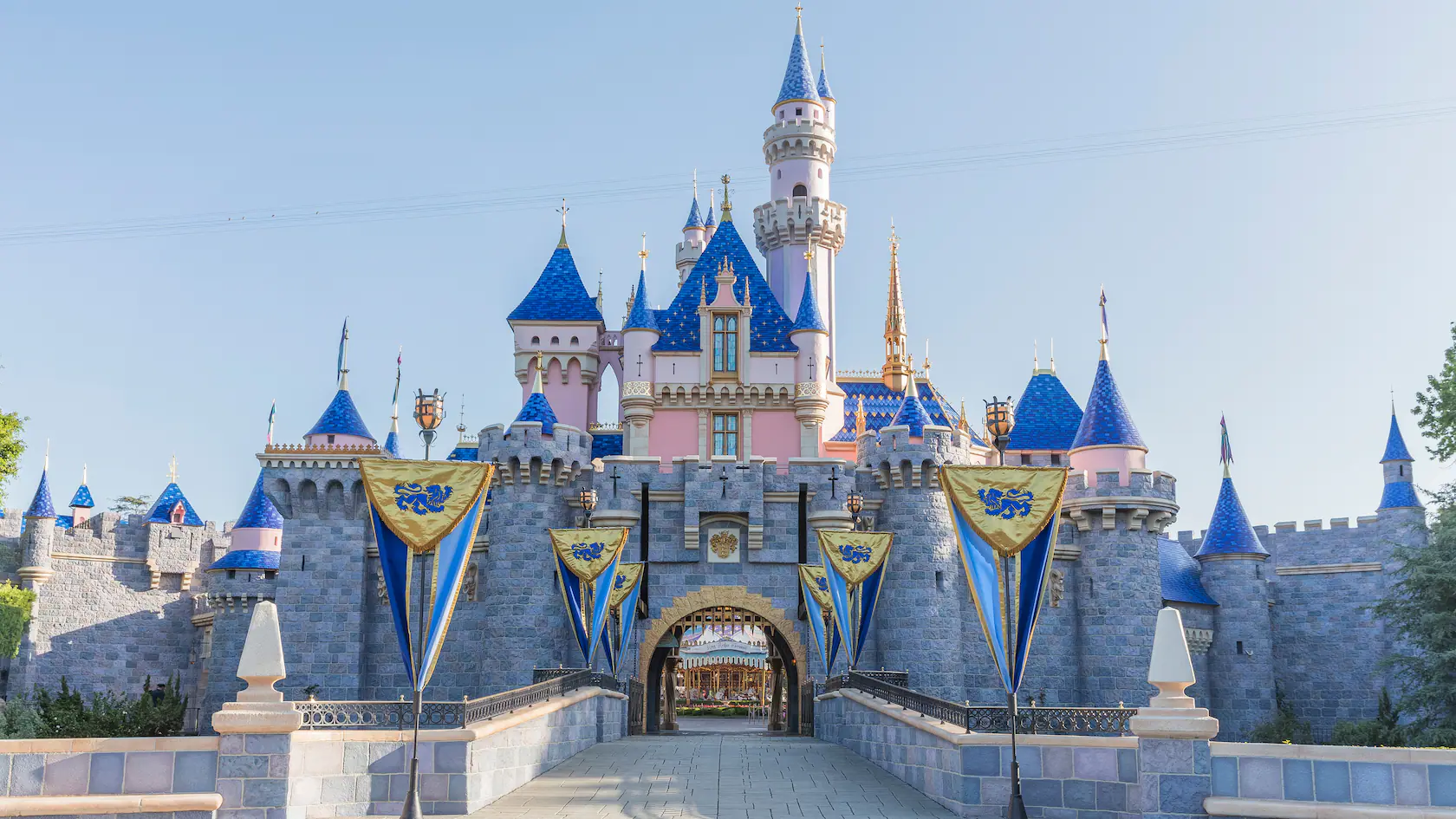
Disneyland opened in 1955, and Walt Disney himself stood on that opening day watching something he had staked everything on. It did not go perfectly that first day. The asphalt on Main Street was soft from the California heat. Some rides broke down. There were crowd problems and counterfeit tickets. But Walt showed up the next day, and the day after that, and Disneyland became something that was hard to describe at the time and is still hard to describe now.
What makes Disneyland work as an experience is worth understanding, especially if you are considering Disney Vacation Club ownership that includes access to the Disneyland area. And if you are trying to decide between Disneyland and Walt Disney World for your next trip, this page gives you a grounded look at what Disneyland actually delivers.
The Scale Makes a Difference
Disneyland is compact. The original park covers about 85 acres. Walt Disney World's Magic Kingdom alone covers about 107 acres. Disneyland is the park that started everything, and it shows in the density of the experience. Attractions sit closer together. Lands transition in ways that feel immediate rather than spread across long distances.
For families with young children, this matters practically. You are not walking for 20 minutes between two rides. The compression of the layout means more of your time goes toward actual experiences and less toward transit between them. Parents of toddlers who have visited both destinations consistently mention that Disneyland is less physically exhausting to navigate.
For adults who are comfortable walking long distances, Walt Disney World's scale offers something different: you can escape into corners of the resort that feel genuinely remote and quiet. That option largely does not exist at Disneyland. What you get instead is intensity, density, and a pace that keeps you engaged from the moment you walk through the gate.
Walt Disney's Original Vision Is Still Present
Disneyland has changed considerably since 1955, but the original bones are still there. Sleeping Beauty Castle, the hub-and-spoke layout with Main Street USA leading to themed lands, the attention to transitions between areas where the sightlines are controlled so you never see the back of one land while standing in another. Walt personally approved and adjusted these design decisions, and they continue to define how the park feels.
Main Street USA is modeled after Walt's hometown of Marceline, Missouri, as he remembered it from childhood. The scale is deliberately reduced to make the street feel more inviting and less intimidating. The second floors of the Main Street buildings are built at roughly five-eighths scale, which creates a sense of intimacy without the reduced scale being obvious.
The original Disneyland attractions that still operate carry decades of history with them. Pirates of the Caribbean opened at Disneyland in 1967. The Haunted Mansion opened in 1969. Indiana Jones Adventure opened in 1995. Each of these has been maintained, updated, and in some cases expanded, but the core of what makes them work has been preserved. There is an argument that experiencing these attractions at the location where they were built and refined over decades is a different kind of experience than riding their counterparts at Walt Disney World.
Two Parks, One Destination
The Disneyland Resort today includes two theme parks: Disneyland Park and Disney California Adventure. They share a resort footprint and can be accessed on a Park Hopper ticket that lets you move between them during the same day.
Disney California Adventure opened in 2001 and has been significantly expanded since its original opening, which received mixed reviews. The park now includes Cars Land, which is widely considered one of the best themed lands anywhere in the Disney system, and Avengers Campus, which houses web-slinging and flying heroes experiences. The expansion and ongoing investment in California Adventure has transformed it from a secondary park into a destination worth the day on its own.
Having two parks to move between creates options that a single-park destination cannot. If one park has unusually long waits for a specific attraction, moving to the other park is an immediate solution. Character meet-and-greet opportunities are distributed across both parks, giving families more flexibility in how they structure their day.
Star Wars: Galaxy's Edge
Star Wars: Galaxy's Edge occupies a 14-acre expansion at the back of Disneyland Park, and it is one of the most immersive theme park land designs that has ever been built. The land puts you on the planet Batuu, a remote outpost at the edge of the galaxy, and it maintains that fiction across every detail from the architecture to the menu items to the staff character interactions.
Millennium Falcon: Smugglers Run lets you actually pilot the Millennium Falcon on a mission. The attraction is interactive in a meaningful way, where your performance in the cockpit affects what happens during the ride. Rise of the Resistance is the most technically complex attraction in the Disneyland Resort, putting guests through a sequence of experiences across a large physical space in a way that requires seeing it to fully understand.
For DVC members who stay at the Grand Californian Hotel and use the private Disney California Adventure entrance, accessing Galaxy's Edge at Disneyland Park involves a short walk. The proximity of the resort to both parks, and the ability to arrive early via the private entrance, helps with experiencing high-demand areas like Galaxy's Edge before the main crowds arrive.
The Nighttime Atmosphere
Disneyland at night is something worth building a trip around. Main Street USA transitions as the sun goes down, the building lights come on, and the whole scale of the area shifts. The castle projections and fireworks show over Sleeping Beauty Castle is one of the best nighttime spectaculars in the Disney system, positioned in a compact enough setting that finding a good viewing spot is achievable without arriving two hours early.
World of Color at Disney California Adventure projects an enormous water screen show onto Paradise Bay after dark. The show is large-scale and technically impressive, and the lagoon setting gives it a visual footprint that rewards a good viewing position. The park's overall atmosphere at night changes significantly from the daytime, with the lighting and the reduced crowd noise creating a different kind of experience.
The Food Has Gotten Significantly Better
Disneyland's dining quality has risen considerably in the past decade. The Bengal Barbecue in Adventureland sells skewers that get a genuine following from repeat visitors. Blue Bayou Restaurant inside Pirates of the Caribbean is one of the best theme park restaurant experiences anywhere in the Disney system, where the dining room sits inside the attraction itself, watching ride vehicles float past in the bayou lighting. Reservations for Blue Bayou book well in advance.
Downtown Disney District, the outdoor shopping and dining area at the entrance to the resort, has been progressively refreshed with higher-quality restaurant options. Napa Rose at the Grand Californian is the resort's flagship fine dining option and a legitimate destination restaurant, not just a hotel restaurant. The overall dining scene at Disneyland Resort is not at the same scale as Walt Disney World, but the quality at the top end is comparable.
DVC and Disneyland Access
DVC Villas at Disney's Grand Californian Hotel are the only DVC property at the Disneyland Resort. The Grand Californian sits physically inside the resort, with a private entrance into Disney California Adventure. DVC villa guests access all the hotel's amenities, including the pool areas and concierge services.
The Grand Californian is the most expensive DVC property to own, both at purchase and in annual dues. For buyers who visit Disneyland specifically and frequently, the private park entrance and home resort booking priority can justify the premium. For buyers primarily interested in Walt Disney World vacations, the pricing is harder to rationalize compared to Florida resort options.
That said, any DVC member can book the Grand Californian at the 7-month booking window when availability exists. Popular dates tend to book out before the 7-month window opens, but shoulder season and midweek stays sometimes have availability. Checking current DVC resale listings shows what Grand Californian contracts trade for today, if ownership is something you are considering seriously.
For DVC members who want to explore the full range of what the program offers across both Disneyland and Walt Disney World, the how DVC works page explains the booking system, the home resort priority, and how to use points across different properties. And if you have specific questions about whether a Disneyland-focused ownership strategy makes sense for your family's travel patterns, our team is available to work through it.
Planning Practical Details
Disneyland is in Anaheim, California, about 30 miles south of Los Angeles. Flying into LAX is the most common option. John Wayne Airport in Orange County is closer to Anaheim and often involves shorter drives, though flight options are more limited. Anaheim's Disneyland Resort is accessible by car, with significant parking available on-site.
Weather in Southern California is generally mild year-round. Winter months bring the lowest crowds. Summer is busy. The holiday season from Thanksgiving through New Year's is the peak of peak, with long lines and limited availability for dining reservations.
A three-day visit to the Disneyland Resort gives most families enough time to experience both parks without feeling rushed. A two-day visit works if you are focused and prioritize specific attractions. More than four days is uncommon for most guests, given the park's smaller scale compared to Walt Disney World.
Frequently Asked Questions
How long do you need to visit Disneyland?
Most families find two to three days sufficient to cover Disneyland Park and Disney California Adventure comfortably, including their priority attractions and some flexibility for return visits to favorites. A four-day visit allows a more relaxed pace, including extra time for dining reservations and character experiences.
Is Disneyland or Walt Disney World better for young children?
Both are excellent for young children. Disneyland's compact layout means less walking between attractions, which can be an advantage with toddlers. Walt Disney World offers a broader range of experiences and a more expansive resort environment. Many families visit both over the years and find they offer genuinely different things rather than one being strictly better than the other.
Can DVC members use points to stay at the Disneyland Resort?
Yes. DVC members can use points at the Grand Californian Hotel villas, which is the DVC property at the Disneyland Resort. Home resort owners get the 11-month booking window. Members owning at other DVC resorts can book Grand Californian at the 7-month window when availability exists. You can see current Grand Californian listings for pricing details.

