


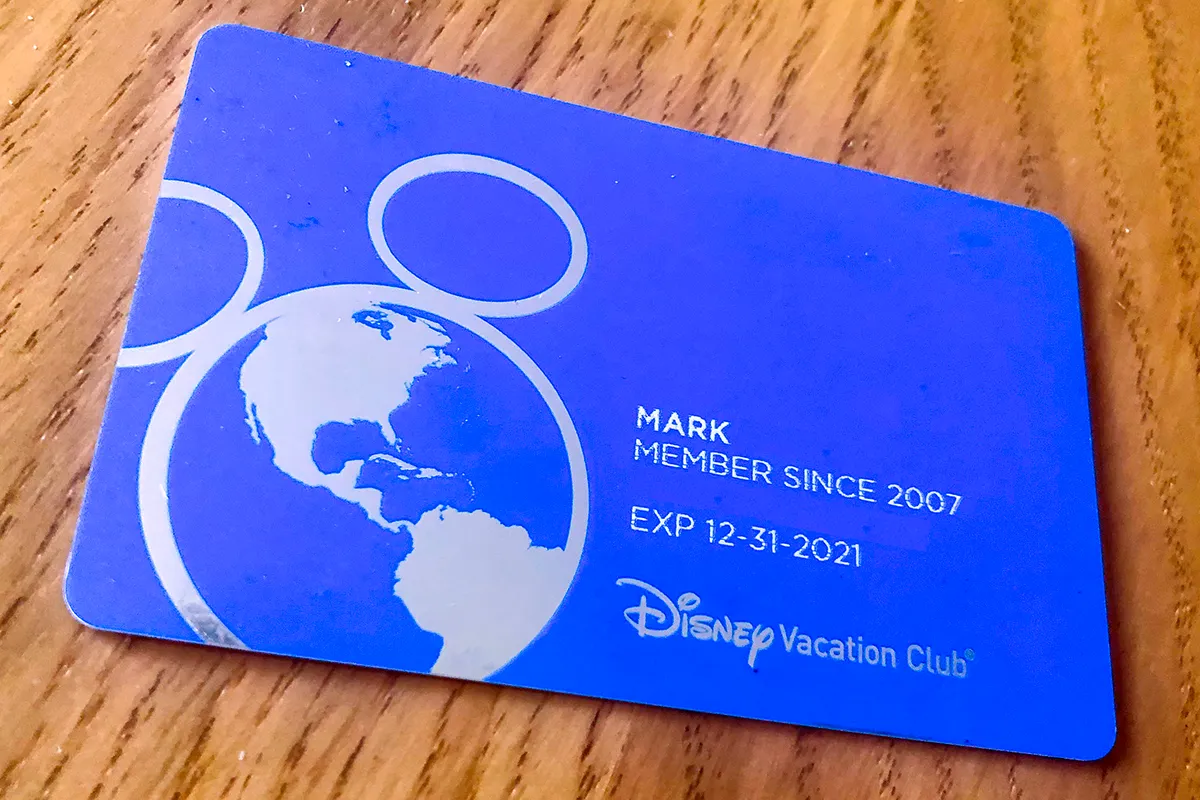
Should You Buy a DVC Membership? An Honest Look at What You Are Actually Getting
The question I hear most often from families considering DVC is some version of: is it worth it? My answer, after 25 years of working in this industry, is that it depends entirely on how much you travel to Disney and what you currently spend on accommodations when you do.
DVC membership is not a universal answer. But for the right family, it is genuinely one of the better long-term financial decisions available in the vacation category. Let me explain the structure honestly, including the parts that are not in your favor, and let you form your own view.
What DVC Actually Is
Disney Vacation Club is a points-based deeded real estate ownership program. When you purchase DVC, you are buying a real estate interest in a specific Disney resort. That interest gives you an annual allotment of points that can be used to book accommodations at any DVC property within Disney's system.
The contracts run for a fixed term. Older properties like Old Key West have contracts running into the 2050s. Newer properties like the Riviera Resort have terms extending into the 2070s. At the end of the contract term, your ownership expires and the points stop. This is not a hotel loyalty program. It is deeded real estate with a defined end date.
Annual dues are charged every year to cover maintenance, property operations, and reserve fund contributions. These dues vary by resort and increase each year in line with operating costs. They continue for the life of the contract regardless of whether you use your points in a given year.
You purchase points at a specific home resort and receive booking priority at that resort 11 months before check-in. For any other DVC property, you can book at the 7-month mark. The home resort advantage is genuinely important for popular properties during peak seasons, where rooms can be fully booked before the 7-month window opens.
The Financial Case For DVC
The most straightforward financial argument for DVC is the comparison between your ongoing cash hotel spending and what DVC ownership would cost for equivalent accommodations.
Take a family that visits Walt Disney World once a year and typically stays at the Wilderness Lodge or the Polynesian in a standard room. Current cash rates for a standard room at those resorts run $350 to $650 per night depending on season, and a five-night stay averages $2,000 to $3,000 in hotel costs alone. Over 10 years, that is $20,000 to $30,000 in hotel spending, at current prices and not accounting for future increases.
A DVC contract sufficient to cover a five-night studio villa stay at one of those properties typically runs 100 to 150 points. On the resale market, those points might cost $130 to $170 per point, putting the purchase price at $13,000 to $25,500. Annual dues on 150 points average roughly $1,200 to $1,500 per year depending on the resort. Over 10 years, total dues add $12,000 to $15,000.
So the rough 10-year comparison is: $20,000 to $30,000 in cash hotel spending versus $13,000 to $25,500 upfront plus $12,000 to $15,000 in dues equals $25,000 to $40,500 total for DVC. At first glance that looks like a wash or even slightly worse for DVC. But the DVC calculation gets better when you account for: villa sizes (DVC studios are larger than standard hotel rooms), the fact that dues often include housekeeping and maintenance costs that cash hotels charge separately, and the resale value of the contract itself.
DVC contracts have resale value. If you purchase at 150 points for $170 per point and sell 10 years later at $130 per point (assuming some depreciation), you recover $19,500 of the original $25,500 investment. That recovery changes the 10-year cost comparison significantly.
The Arguments Against DVC
Let me be honest about when DVC is the wrong choice.
If you visit Disney once every three years or less, the math does not work. Annual dues on a contract you barely use still cost money every year. The upfront investment never recovers through accommodation savings at low visit frequency.
If you are likely to want flexibility to stay at different vacation destinations, DVC ties your accommodation budget to Disney properties. There is a program to exchange DVC points for other resort stays through Interval International or Disney's own exchange options, but the value per point through those programs is much lower than using points for direct Disney bookings. DVC is optimized for Disney travel, not general vacation flexibility.
The annual dues obligation does not go away in bad years. If your family goes through a period when Disney travel is impractical (health issues, financial changes, children at ages when Disney is not their priority), the dues continue. You can bank unused points one year and borrow from the next year's allocation, which provides some flexibility, but you cannot simply pause ownership.
Resale contracts, which are the most cost-effective way to buy, are not eligible for all Disney member benefits. Specifically, resale contracts are ineligible to use points at Disney's newest resorts, including the Riviera Resort and some upcoming properties. For most families this is not a significant limitation, but it is worth knowing.
What DVC Ownership Actually Feels Like
Beyond the financial analysis, there is a qualitative change to Disney travel that DVC members frequently describe. When you own at a specific resort, you start to know it differently. The layout, the staff, the seasonal rhythms, the best pool times, the restaurant reservations worth making. You accumulate knowledge about that property that transforms your experience from being a tourist in a hotel to feeling like a regular at a place you genuinely know.
The villa spaces accelerate this feeling. Cooking breakfast in your own kitchen before a park day, doing a load of laundry on day four, gathering the whole family in a real living room to watch a movie after dinner. These are not glamorous experiences, but they make a week-long Disney trip feel different in ways that matter over the course of many visits.
DVC members also have access to member-only booking opportunities, events, and merchandise releases that add value beyond the accommodations themselves. These perks vary and Disney modifies them over time, but the membership does provide access to a layer of Disney experience that is not available to general hotel guests.
How the Resale Market Makes DVC More Accessible
The single biggest barrier to DVC ownership is the upfront cost. Disney's retail pricing for new DVC contracts runs above $200 per point at most resorts and above $250 at premium properties like Grand Floridian, Polynesian, and Grand Californian. For a 150-point contract, that is $30,000 to $37,500 before any closing costs.
The resale market offers the same ownership rights at lower prices. Resale contracts are available because DVC members who purchased years ago are now selling for a variety of reasons: family circumstances changed, they are not traveling as much as anticipated, or they simply want to recover capital from the investment. These sellers negotiate directly with buyers through brokers like DVC Sales.
Our commission is 6.9%, which is lower than the industry standard. The buyer pays a $500 Disney administration fee at closing. Those are the only fees. The retail prices page shows what Disney charges directly, and the resale listings page shows what contracts are currently available through our brokerage. The difference between those two numbers is the savings you capture by purchasing resale.
Which Resort Should You Choose?
If DVC seems like a potential fit, the next question is which resort to choose as your home resort. This decision matters because of the 11-month booking priority, which determines whether you can reliably get your preferred dates at your preferred property.
Families who primarily visit Walt Disney World and want Magic Kingdom proximity should look at the Monorail Resorts: Grand Floridian, Polynesian Village, and the Contemporary/Bay Lake Tower. For EPCOT proximity, Beach Club Villas and BoardWalk Villas are the closest. For Animal Kingdom access, the Animal Kingdom Villas at Jambo House or Kidani Village.
For Disneyland-focused families, Grand Californian is the primary DVC option and it is an excellent one. You can see the full DVC resorts overview here for a property-by-property breakdown.
Our team can help you think through which resort makes the most sense for your specific travel patterns. Reach us through the contact page. The conversation is free, there is no obligation, and we will give you our honest view even if that view is that DVC is not the right fit for your current situation.

