


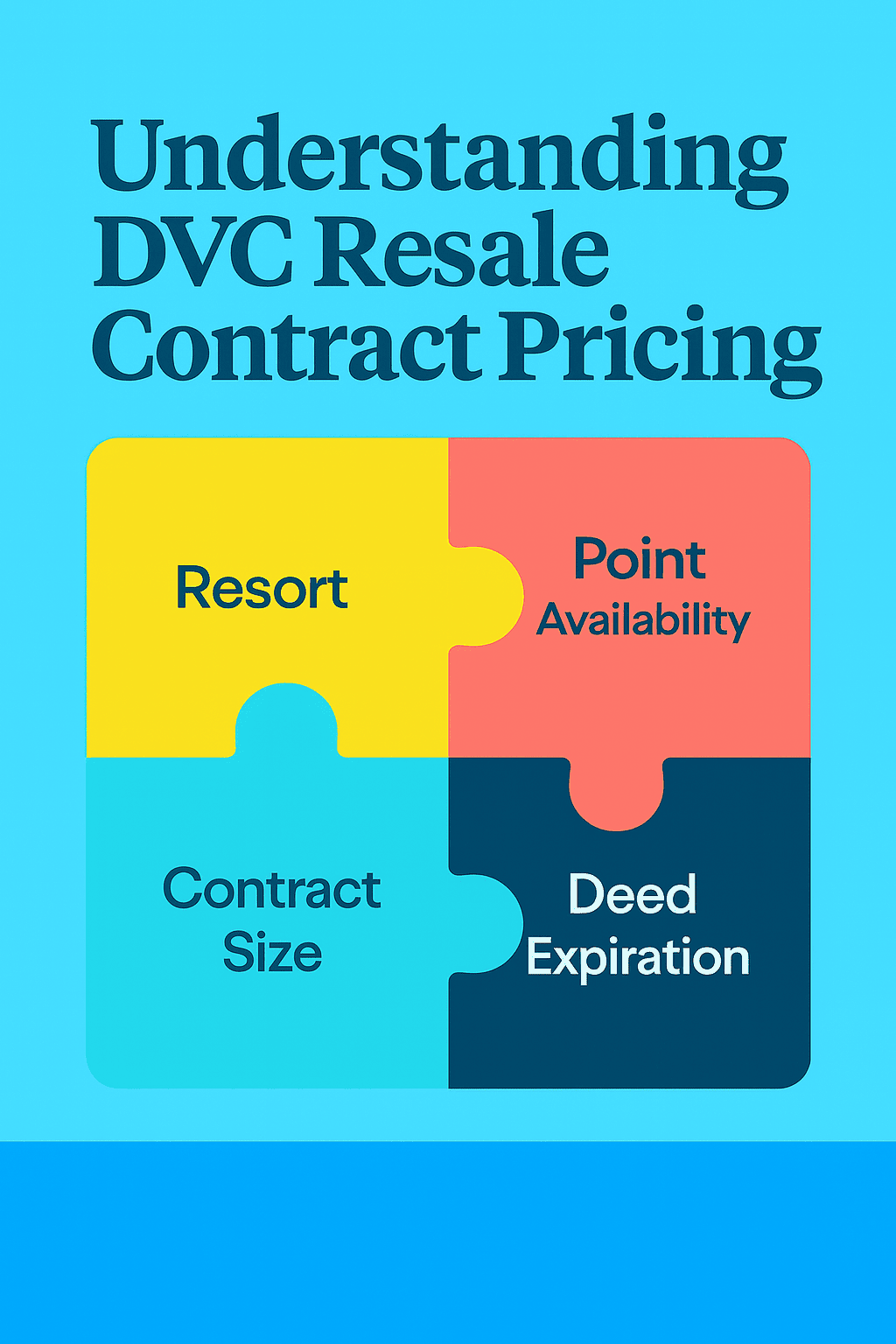
Setting the right price for your DVC resale contract determines how quickly you'll find a qualified buyer and complete your sale. After helping hundreds of families through the resale process, we've seen that accurately priced listings generate more interest, receive offers faster, and have a better chance of passing Disney's Right of First Refusal. Here's what you need to know about pricing your contract for the best results.
Understanding DVC Resale Market Values
DVC resale prices move up and down based on supply and demand at each individual resort. When there are many contracts available at Bay Lake Tower, for example, prices become more competitive. When inventory is limited, sellers have more pricing power.
We maintain current listings and historical sales data that you can reference when pricing your contract. Looking at asking prices gives you a starting point, but understanding what contracts actually sold for tells you what buyers are willing to pay. The gap between asking prices and sale prices varies by resort and changes with market conditions.
Economic factors also play a role. When interest rates are high or consumer confidence is low, buyers become more price-sensitive. During strong economic periods, buyers are often willing to pay closer to asking prices.
Resort-Specific Pricing Factors
Each DVC resort has characteristics that directly affect its resale value. Location drives much of the pricing difference between resorts. Properties on the monorail system and those within walking distance of theme parks command premium prices because of the convenience factor.
Deluxe villa resorts like Polynesian Village, Grand Floridian, and Contemporary Resort typically sell for $200 to $275 per point in today's resale market. Meanwhile, resorts like Saratoga Springs and Old Key West often trade in the $135 to $175 per point range.
Contract expiration dates create another pricing layer. Resorts with expiration dates beyond 2050 offer decades of use and maintain stronger resale values. Contracts at older resorts like Old Key West (expires 2042) or Saratoga Springs (expires 2054) may need more competitive pricing to offset buyer concerns about fewer remaining years.
Contract Details That Affect Price
Your specific contract terms can significantly impact what buyers will pay. Point totals affect both the per-point price and the size of your potential buyer pool. Smaller contracts (25 to 75 points) often command slightly higher per-point prices because more buyers can afford the total purchase amount. Larger contracts may require more competitive per-point pricing to attract the smaller pool of buyers who want that many points.
Point availability matters tremendously to buyers. A contract with current-year points available or banked points from the previous use year is worth considerably more than a stripped contract with no points available for immediate use. Buyers value being able to book vacations right away rather than waiting months for their next allocation.
Use year timing can influence pricing as well. February, March, and October use years align with popular vacation seasons and school breaks, potentially supporting slightly higher prices. Less common use years like May or September may require modest price adjustments to remain competitive.
Analyzing Comparable Listings
Start by reviewing active DVC resale listings for contracts similar to yours at the same resort. Note the asking prices, point totals, use years, and point availability for each comparable. Calculate the per-point price to compare across different contract sizes accurately.
Pay attention to how long comparable listings have been on the market. Contracts listed for several months without selling are likely overpriced for current conditions. Newly listed contracts that receive offers quickly suggest strong demand and potentially room for higher pricing.
Don't just look at asking prices. Research what similar contracts have actually sold for recently. The difference between what sellers ask and what buyers pay reveals the true market value range for your resort and contract type.
ROFR Considerations in Pricing
Disney exercises their Right of First Refusal more frequently on contracts priced significantly below market value. If you price too aggressively to generate quick offers, you increase the risk that Disney will exercise ROFR and purchase your contract instead of allowing it to transfer to your buyer.
We track recent ROFR results for each resort to understand current patterns. Setting your price within the range of contracts that have successfully passed ROFR increases the likelihood your sale will close with your intended buyer.
ROFR patterns also vary by resort. Disney tends to exercise ROFR more frequently on certain high-demand resorts when prices fall below specific thresholds. Understanding these patterns helps you price strategically.
Strategic Pricing Approaches
You can choose between aggressive pricing for a faster sale or premium pricing with patience for the right buyer. Aggressive pricing generates immediate interest and often results in multiple offers, which can drive your final sale price back up through competition.
Premium pricing works for highly desirable contracts but requires patience. If you have a Bay Lake Tower contract with February use year and banked points available, you might be able to start at the high end of the market range. But if you need to sell within 60 days, competitive pricing accelerates the process.
Consider your timeline and priorities when selecting an approach. Quick sales require competitive pricing from the start. Maximizing sale price means starting higher and being prepared to adjust if the market doesn't respond.
Adjusting Price Based on Response
Monitor buyer response carefully after listing your contract. A well-priced listing typically generates inquiries and showings within the first two weeks. If your listing receives minimal interest after a month, the market is telling you the price needs adjustment.
We provide seller dashboards showing listing views, inquiry volume, and buyer activity. This data helps you assess whether your pricing is generating appropriate interest or needs modification based on market feedback.
Price adjustments should be meaningful enough to attract new buyers. Small reductions of $2 to $3 per point often don't generate renewed interest. Reductions of $5 to $10 per point typically bring your listing back to buyers' attention.
Working with Current Market Conditions
The DVC resale market changes throughout the year. January through March typically see increased buyer activity as families plan their vacation purchases for the new year. Summer months can be slower as families focus on current vacations rather than future purchases.
Interest rate environments also affect buyer behavior. When financing costs are high, buyers become more price-sensitive and may focus on smaller contracts that require less borrowing. When rates are low, buyers often consider larger purchases.
Stay informed about broader DVC market trends that might affect timing and pricing decisions. Sometimes waiting a month or two for better market conditions makes sense, while other times pricing aggressively for current conditions is the better approach.
Getting Expert Pricing Guidance
We offer personalized pricing recommendations based on your specific contract details and current market conditions. Our team analyzes recent sales data, current inventory levels, and buyer demand patterns to suggest an asking price that balances competitive positioning with value optimization.
Every contract is different, and market conditions change regularly. What worked for a similar contract three months ago might not be the right approach today. Contact our selling team to discuss your contract and receive current market guidance tailored to your specific situation and timeline.
Want a free price estimate?
See what your DVC contract is worth today. Our licensed brokers give you a real number, not a ballpark.
Get My Free Estimate