



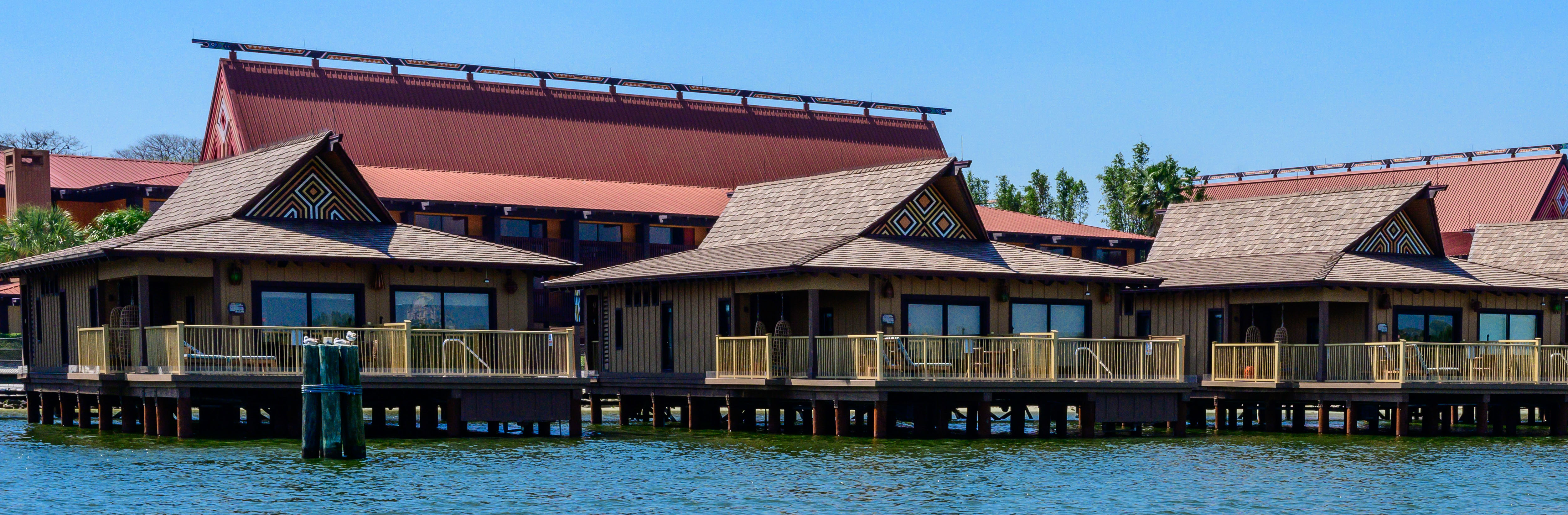
There are DVC resorts with great views, DVC resorts with great transportation, and DVC resorts with strong prestige. Disney's Polynesian Village Resort is one of the few that delivers all three at once. Sitting directly on the Seven Seas Lagoon with a Magic Kingdom fireworks view from multiple spots on the property, a monorail station at the resort entrance, and the only overwater bungalows in the entire Disney Vacation Club system, the Polynesian has a devoted following for good reason.
We've brokered a lot of Polynesian contracts over the past 25+ years, and we can tell you that buyers who choose the Polynesian tend to have a very clear picture of what they want. They're not hedging. They're committed to the monorail loop, the lagoon, and that particular version of Walt Disney World that still feels like the one Walt himself imagined. If that sounds like you, let's look at everything you need to know before purchasing a Polynesian DVC resale contract.
The Setting: Seven Seas Lagoon and Magic Kingdom Views
The Polynesian sits on the north shore of Seven Seas Lagoon, directly across the water from Magic Kingdom. That placement gives the resort something most DVC properties simply don't have: a genuine sense of place that exists independently of the theme parks themselves.
From the beach, the main pool area, and many villa rooms, you have a clear sightline to Cinderella Castle. On nights when Magic Kingdom runs its fireworks show, you can watch the entire display from the beach with a cocktail in hand and no crowds around you. The Electrical Water Pageant passes by each evening as a kind of informal preshow. It's a surprisingly peaceful way to end a day at Walt Disney World.
The resort's 39 acres of landscaping, torch-lit pathways, tropical plants, and water features also create an atmosphere that makes the property feel like a genuine retreat rather than a hotel you're just sleeping at. That matters when you're planning vacations you'll take repeatedly over 25 to 50 years of DVC ownership.
Transportation: The Monorail Advantage
The Polynesian is one of three resorts on the Magic Kingdom monorail loop, along with Disney's Contemporary Resort and Disney's Grand Floridian Resort. The monorail station sits directly at the resort entrance, which means getting to Magic Kingdom takes roughly five minutes from the lobby. No buses, no waiting.
You can also reach EPCOT by monorail, transferring at the Transportation and Ticket Center. It's not the fastest EPCOT connection in the park system (Beach Club and BoardWalk guests walk faster), but it's comfortable and reliable. For Magic Kingdom days specifically, the Polynesian location is hard to beat in the entire WDW resort portfolio.
The resort also has its own boat dock. Water taxis run to Magic Kingdom on a regular schedule, which is particularly useful when the monorail is down for maintenance or during the busy morning rush when every monorail car is packed. The boat ride itself, crossing Seven Seas Lagoon with the castle growing larger in front of you, is one of those small WDW moments that stays with you.
DVC Villa Accommodations
Studios
Polynesian Studios sleep up to five guests with a queen bed, queen sleeper sofa, and a single pull-down bed. That five-guest capacity in a studio is higher than many other DVC resorts and makes the Polynesian practical for families with three kids who don't yet need a separate bedroom. Kitchenettes include a mini-refrigerator, microwave, and coffee maker. The island-inspired decor, with warm wood tones and tropical artwork, is done well throughout.
One-Bedroom Villas
One-Bedroom Villas accommodate up to five guests with a king bed in the private bedroom, a queen sleeper sofa in the living area, and a full kitchen with standard appliances plus washer and dryer. If you're planning stays of five nights or more, the kitchen and laundry become legitimately useful for keeping vacation costs down. Polynesian One-Bedrooms require roughly 25 to 45 points per night depending on season and view category.
Two-Bedroom Villas
Two-Bedroom Villas sleep up to nine guests and are available as dedicated units or as lockoffs combining a studio and one-bedroom. These are the right choice for extended family trips or groups where privacy matters. Point requirements in peak season for a two-bedroom villa are substantial, in the 50 to 75 point-per-night range, so a 200-point contract supports roughly three to four nights in that configuration.
The Bungalows: The Unicorn of DVC
There are 20 overwater bungalows at the Polynesian, and there is nothing else like them in the DVC system. Built on stilts over Seven Seas Lagoon, they're two-bedroom villas sleeping up to eight guests, each with a private deck, a plunge pool, outdoor dining space, and direct water views of Magic Kingdom. From your deck at night, you watch the fireworks from a few hundred yards across the lagoon.
The bungalows are also extraordinarily point-intensive. A bungalow requires roughly 100 to 200 points per night depending on the season. During peak summer and holiday periods, a single bungalow night can cost more points than some families use in an entire year. Most owners who stay in the bungalows are either banking points from multiple years or own very large contracts, often 300 or more points annually.
Booking availability for bungalows at the 7-month mark is essentially nonexistent for desirable dates. If bungalows are your goal, you need to own at the Polynesian specifically and book the day your 11-month window opens. Even then, the most popular dates go fast.
The Polynesian Tower: What's New
Disney has been adding a new DVC tower at the Polynesian called Disney's Polynesian Villas and Bungalows, incorporating the former Spirit of Aloha theater site into a new multi-story building with additional DVC inventory. The new tower brings more studio-heavy inventory to the Polynesian and introduces its own point chart separate from the longhouse villas and bungalows.
From a resale perspective, this expanded inventory is worth understanding. The tower adds more studios to an already popular resort, which may affect booking dynamics at the 7-month mark over time. Buyers specifically targeting bungalows or the original longhouse villas should pay attention to which deed they're purchasing, as contracts can be tied to specific buildings within the resort with different point charts attached.
Current Resale Pricing and ROFR Activity
Polynesian DVC resale contracts are currently trading in the range of approximately $140 to $170 per point. That puts the Polynesian at the higher end of the DVC resale market, reflecting the resort's consistent popularity. Compare DVC resale prices across all resorts. The premium associated with the bungalows as headline inventory.
Direct purchase from Disney for a Polynesian contract runs approximately $220 to $250+ per point, so resale still represents a meaningful discount of 30 to 40 percent off the direct price. On a 200-point contract, that's a savings of $15,000 to $25,000 compared to purchasing the same points directly.
ROFR activity at the Polynesian has historically been more aggressive than at some other resorts, which tells you something about how Disney values this property. When Disney exercises ROFR, it purchases the contract from the seller at your agreed price, and the buyer has to start over. Our team monitors current ROFR trends at every resort before any offer goes in. Pricing a Polynesian offer correctly to pass ROFR while still giving you a fair deal is a real skill, and it's one of the areas where working with an experienced broker makes a tangible difference.
Our commission rate is 6.9%. Learn more about the costs involved in selling DVC, and closing typically runs about 45 days from accepted offer, including the ROFR window and title work.
Home Resort Advantage: Why Owning at the Polynesian Matters
The 11-month booking window at your home resort is valuable at every DVC resort. At the Polynesian, it's arguably essential if you have any interest in bungalows, preferred view rooms, or peak-period reservations of any kind.
At the 7-month mark, Polynesian availability for anyone who doesn't own there is genuinely limited during high-demand periods. Peak summer, spring break, and holiday dates are consistently booked well before the 7-month window opens. A buyer who purchases a Polynesian contract specifically to use it at the Polynesian but then waits until 7 months to book is likely to be disappointed with the results.
If your goal is staying at the Polynesian regularly and specifically, owning there matters. If you're primarily interested in Walt Disney World DVC and the Polynesian is one of several resorts you'd enjoy, a different home resort with lower per-point costs might give you better value overall, since you'd still have 7-month access to the Polynesian when availability exists.
Who Purchases Polynesian DVC Resale?
Polynesian buyers fall into a few clear categories in our experience:
- Monorail loyalists. Families who specifically want Magic Kingdom access without buses. They've usually stayed on the monorail loop before and won't accept anything else.
- Magic Kingdom families. Parents of young children, especially, who are planning a decade or more of Magic Kingdom-focused trips and want the Polynesian's combination of proximity and atmosphere.
- Bungalow dreamers. Members who may not stay in the bungalows every trip but want the option, either for a milestone anniversary, a family reunion, or simply because owning where the bungalows are matters to them.
- Classic Disney enthusiasts. People who feel the Polynesian represents a version of Walt Disney World that's getting harder to find. The theming and setting have a 1971 vintage feel that newer WDW resorts simply don't replicate.
Who probably should not purchase Polynesian? Buyers who are primarily EPCOT focused, families who visit mostly during off-peak periods when availability at the Polynesian is less constrained, and anyone primarily drawn to the bungalows but not prepared for the point costs those require.
Practical Planning Considerations
A few things to factor in when modeling a Polynesian contract for your vacation patterns:
Points per trip. A four-night studio stay during a moderate-demand period might run 60 to 80 points. The same trip during summer or a holiday week could require 100 to 140 points. Build your contract size around your highest-frequency scenario, not your lowest.
Use year selection. The Polynesian has contracts available in multiple use years. Choosing a use year that aligns well with your typical booking windows matters more at a high-demand resort like this one, where banking and borrowing decisions happen under real time pressure. Ask your broker to walk through the use year options before you make an offer.
Point banking windows. If you bank points at the Polynesian and then try to use them for a bungalow stay, understand that banked points expire at the end of the use year following the one they were banked from. Bungalow stays consume points fast, so having the right volume of active points available is a planning exercise worth doing in advance.
The Polynesian remains one of the most consistently sought-after resale listings we see. When a well-priced contract comes to market, it doesn't sit long. If you're seriously considering a Polynesian purchase, have your finances ready to move, because the window between a good listing appearing and it receiving multiple offers is often shorter here than at most other DVC resorts.
Ready to look at current listings or talk through whether Polynesian ownership fits your vacation style? Our team has closed contracts at the Polynesian for more than 25 years. We know what makes a good deal here and what to watch out for. Reach out and let's start the conversation.






Got Something on Your Mind?
Your email address will not be published. Required fields are marked *