


What Is My DVC Membership Worth?
When you are thinking about selling your DVC membership, the first question is almost always what it is actually worth. The honest answer is that your contract's value is determined by what buyers are currently willing to pay for contracts similar to yours at the same resort. Not what you paid for it originally. Not what Disney charges for new direct memberships. Not what some online calculator estimates based on stale data. The market sets the price, and the market changes constantly.
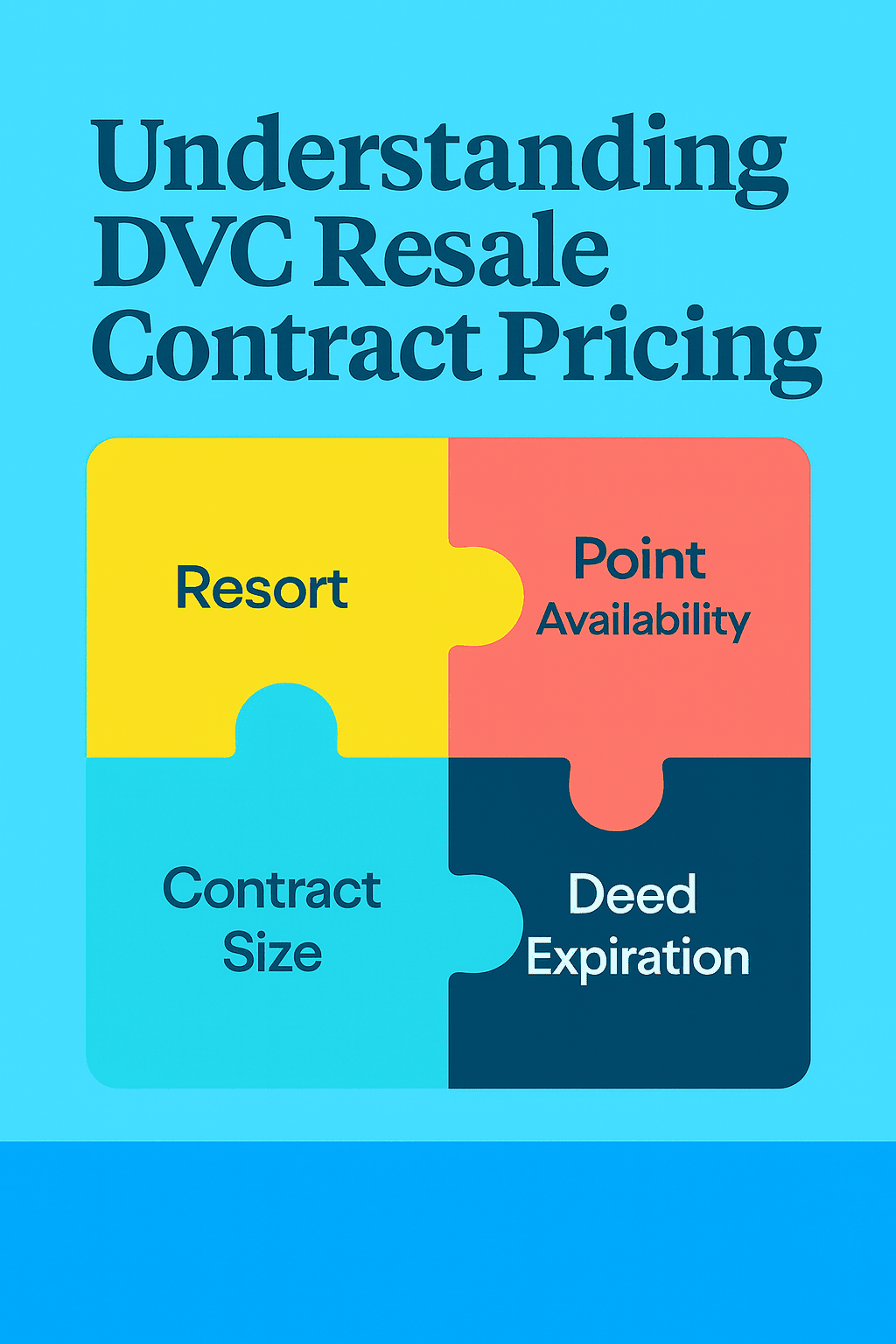
The resale value of your DVC membership depends on a handful of variables, and understanding each one helps you set a realistic price and make good decisions about timing your sale.
Resort Location Is the Starting Point
The single biggest driver of resale value across DVC contracts is resort location. High-demand resorts like Beach Club, Polynesian, Grand Floridian, and Boardwalk consistently command higher prices per point in the resale market. The reason is straightforward: those resorts offer something unique, particularly their proximity to EPCOT and the Magic Kingdom, along with access to home resort booking advantages at a location that is harder to get at the 7-month window.
Saratoga Springs and Old Key West sit at the other end of the price range. Both offer lower per-point resale prices and also carry lower annual dues than most other WDW resorts. For buyers focused on maximizing points for their dollar and minimizing ongoing costs, those resorts offer real value. But they trade differently in the resale market than Beach Club or Polynesian.
If you want to see what Disney currently charges for new contracts at your resort, the DVC retail prices page lists current retail pricing. Resale contracts at most WDW resorts sell for 30 to 50 percent below those retail figures, though the gap varies by resort and by current market conditions.
Available Points Matter More Than You Might Expect
Two contracts at the same resort with the same deed point total can be worth noticeably different amounts depending on how many points are actually available at the time of sale. A contract with banked points from the prior year plus a full current-year allotment represents more immediate vacation value than one where most of this year's points have already been used.
Buyers evaluate available points carefully because they want to start booking trips as soon as possible after closing. A fully loaded contract lets them do that right away. A stripped contract means waiting until the next use year, which could be months away depending on timing. That waiting period has real cost, and buyers price it accordingly.
If you have used most of your current-year points on recent trips, your contract is still sellable, but the per-point price will need to reflect the limited immediate availability. This is not a negative judgment on how you used your membership. It is just market reality.
Use Year and Its Effect on Value
Use year is the month of the year when your points refresh. It affects when you can bank or borrow points and how your membership aligns with your vacation timing. Some use years are more popular than buyers than others, though the effect on resale price is usually modest compared to resort location and available points.
February and October use years tend to move well because they accommodate many families' vacation patterns. Use years in summer months can appeal to families with school-age children. If your use year aligns well with when most families vacation, it may add a small premium to your contract in a competitive market. But use year alone rarely makes or breaks a sale. It is more of a tiebreaker between two otherwise similar contracts.
Contract Size and Its Trade-offs
Larger contracts tend to sell at slightly higher prices per point than smaller ones. A 300-point contract at Saratoga Springs will typically command a higher per-point price than a 100-point contract at the same resort with the same use year. Part of the reason is that larger contracts reduce the per-transaction closing costs for the buyer on a per-point basis. Part of it is that buyers looking for larger allotments have fewer options and may compete more aggressively.
Small contracts, generally those under 100 points, can be a mixed picture. They are attractive to buyers who want to add points to an existing membership or who are testing DVC ownership at a lower entry cost. But they also attract more price sensitivity because the closing costs eat up a bigger percentage of the total purchase price. If you are selling a small contract, competitive pricing is even more important than it is for mid-size or large contracts.
How to Get a Realistic Current Market Estimate
The most reliable way to assess what your membership is worth right now is to look at what comparable contracts are currently listed for and what similar contracts have recently sold for. At DVC Sales, you can browse active listings filtered by your resort to see the current price range. Look at the contracts in the top tier of the rankings at your resort. Those are the ones generating actual buyer interest. Your contract's value is in that range, adjusted for your specific available points and use year.
If you already have your listing with us, Section 3 of your View Details page in the seller dashboard gives you a direct read on how your contract ranks against all active listings at your resort. That ranking is the clearest signal available about whether your current price is competitive.
For a deeper look at market-wide trends and transaction volumes by resort, our team can walk you through current conditions when you contact us. We track actual closed sales, not just asking prices, which gives a more accurate picture of what contracts are actually selling for versus what sellers are asking.
What Affects Value That Is Outside Your Control
A few things can affect your contract's market value that have nothing to do with your specific contract details. Overall DVC resale market conditions shift over time. If there are 50 active listings at your resort right now, prices will be more competitive than if there are only 12. Disney's direct retail pricing also affects resale demand indirectly. When Disney raises direct prices, resale becomes comparatively more attractive and demand can increase. When Disney runs heavy incentives on new sales, some prospective buyers may choose direct over resale.
Seasonal patterns matter too. Buyer activity tends to be stronger in spring and fall than in the middle of summer or around the holidays. If you have flexibility in when you list, timing your listing for a period of higher buyer activity can help. But for most sellers, the timing flexibility is limited, and pricing competitively matters more than timing the listing to a particular season.
Annual Dues Are Part of the Value Equation
Buyers looking at DVC resale contracts think about more than the purchase price. Annual dues are a permanent ongoing cost of ownership that compounds over time. Resorts with higher dues per point cost buyers more each year to maintain the same point allotment. That ongoing cost is factored into what buyers will pay upfront.
For sellers, understanding the dues structure at your resort helps explain part of the pricing dynamic. A resort with high dues will see more price pressure in resale because buyers are already discounting for the long-term cost of ownership. A resort with low dues can support somewhat higher resale prices because the total cost of ownership over time is more attractive. Our annual dues page lists current dues by resort so you can see where your resort sits in that spectrum.
Getting a Professional Assessment
If you want a specific assessment of what your DVC membership is likely to sell for in the current market, our team at DVC Sales can help. We look at your specific resort, point count, use year, available points, and how your contract compares to current listing activity to give you a realistic price range.
That assessment is free, and it is based on actual current market data rather than estimates or generalizations. After 25 years of handling DVC resale transactions across every WDW resort, we have a detailed picture of where pricing is right now and how it has been trending. Reach out through the contact page to get started. You can also browse DVC resorts for background on the full portfolio of properties if you want more context on what makes certain resorts more or less valuable in the resale market.

