



A Step-by-Step Guide to Choosing Your Payment Method
One of the most common questions we receive is about how to receive your DVC resale proceeds after the sale closes. Understanding your payment options and the timelines involved helps your transaction complete smoothly and securely. We have helped hundreds of sellers through this final step, and here is what you need to know about your payment choices, timelines, and key considerations.
Under Florida real estate law, the title company is legally required to disburse your DVC resale proceeds within one business day of the deed being officially recorded. That timeline is firm and protected. So once your deed records, your money is moving the next business day at the latest.
Payment Options for Your DVC Resale Proceeds
After your DVC resale closing is officially completed and the deed is recorded, the title company will release your proceeds directly to you. Sellers can choose from two secure, convenient methods.
Wire Transfer
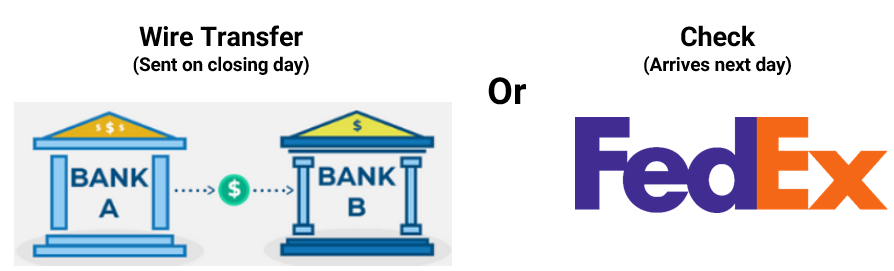
Most sellers prefer to receive their DVC resale proceeds via wire transfer. It is fast, secure, and reliable. Funds typically arrive either the same day or the next business day, depending on your bank internal processing times.
- Fastest payment method available
- Funds arrive directly in your designated account
- Secure and trackable from the moment of initiation
- No check to lose in the mail
Double-check your banking details carefully before submitting them to the title company. An error in your routing or account number can delay funds by several business days. The title company will ask you to confirm these details in writing before initiating the transfer.
FedEx Overnight Check
If you would prefer not to share your banking information, you can receive your proceeds via FedEx overnight check. This secure method usually delivers your payment by the next business day.
- Keeps your banking details private
- Reliable next-day delivery to your confirmed address
- Secure and trackable through FedEx
While this method is slightly slower than a wire transfer, it remains efficient and secure. The difference is minimal, usually just a day or two at most.
Selecting Your Preferred Payment Method
During the closing phase, the title company will send you a secure online form to select your preferred method and provide necessary details. If you have any concerns or questions about completing this form, the team at DVC Sales is always available to assist.
Decide on your preferred method early in the process. This way, there is no last-minute rush and your funds are disbursed without delay. Both options work well, so it comes down to whether you prefer speed via wire transfer or keeping your banking information private via overnight check.
When Will You Receive Your Proceeds?
Under Florida real estate law, the title company is legally required to disburse your DVC resale proceeds within one business day of the deed being officially recorded. This ensures your payment is prompt and reliable.
Typically, you will see the funds in your account via wire transfer within one business day. If you are receiving an overnight check, you will usually receive it the following business day. Keep in mind that business day means Monday through Friday, excluding federal holidays. If your deed records on a Friday, you might not see funds until the following Monday or Tuesday, depending on your chosen method.
Important Tips for Receiving Your Proceeds
- Verify your bank account details carefully for wire transfers to prevent delays
- Ensure the address provided for check delivery is current and accurate
- Keep an eye out for confirmation emails from the title company and your DVC Sales dashboard for real-time updates
- Have a backup contact method available in case the title company needs to reach you quickly
The title company will typically send you tracking information for overnight checks or confirmation details for wire transfers. Save these for your records and follow up if you do not receive expected communications within the expected timeframe.
How Your Net Proceeds Are Calculated
Your net proceeds are your final sale price minus our 6.9% commission, minus the 50 Disney estoppel fee, plus or minus any annual dues prorations based on your closing date and use year.
For example, if you sell a contract for 5,000, the commission is ,035, and the estoppel fee is 50, leaving 3,815 before dues adjustments. The title company will provide you with the exact calculation in your closing statement well before closing day.
If your use year results in a prorated dues credit or debit, that adjustment appears on the closing statement as well. Buyers reimburse sellers for annual dues on current-year bankable points if closing is before December. If closing is in December, no reimbursement is required for current-year points.
Tax Reporting and What to Keep
The title company handles required tax reporting, including issuing you a 1099-S form if your sale meets IRS reporting requirements. Keep your final closing statement and the 1099-S in your records. You may want to consult with a tax professional about any potential capital gains implications, particularly if you have owned the contract for many years.
If you paid more for the contract than you received, the loss may be deductible depending on how the ownership was structured. If you received more than your original purchase price, you likely have a capital gain. These are questions for your accountant rather than your real estate agent.
Final Steps After Receiving Your Proceeds
Once you receive your funds, your DVC resale transaction is complete. You will no longer be responsible for annual dues, and your Disney Vacation Club membership will officially transfer to the new owner. The title company will send you final closing documents for your records.
Both wire transfer and overnight checks are secure, efficient ways to receive your DVC resale proceeds. The right choice depends on your personal preferences for speed, convenience, and privacy. If you still have questions or need assistance deciding, reach out to our team. We are here to guide you through every step, from listing to final payment.
What Gets Deducted Before You Receive Proceeds
Before the title company sends your proceeds, several deductions are applied. The most significant is the broker commission. At DVC Sales, our commission is 6.9 percent of the sale price, which is lower than the 9.5 percent industry average. That difference adds up meaningfully on contracts with larger sale amounts.
The Disney Estoppel fee of 50 is also a seller expense and is deducted from proceeds. The estoppel is a document Disney provides that confirms the current ownership details and point status. It is required for every resale transfer and is ordered by the title company after ROFR clears.
If there is an outstanding loan balance on the contract, the payoff amount is deducted from proceeds before the net is sent to you. Most title companies coordinate the loan payoff directly with the lender as part of the closing. You do not need to arrange this separately. The closing disclosure will show the payoff amount as a line item.
Any unpaid annual dues or outstanding Disney fees are also deducted. If your dues were current when you listed, this is usually not an issue. But if dues came due between listing and closing, the closing company will verify the balance and deduct any outstanding amount before releasing proceeds.
How Wire Transfers Work in DVC Resale
Wire transfers are the standard method for DVC resale proceeds and are how the vast majority of sellers receive payment. The title company initiates the wire on the business day after the deed records. The wire typically arrives the same day or the next business day depending on your bank processing times.
To receive a wire, you need to provide your bank name, routing number, account number, and account holder name to the title company. This information is usually collected during the closing document signing phase, not at the last minute. Having it ready early prevents any delays in the fund release.
Wire transfers are final and typically irreversible once sent. Confirm your banking details carefully before submitting them. If you provide an incorrect account or routing number, retrieving the funds can be complicated and time-consuming. Most title companies will call to verify wire instructions before sending, which is an important security step.
International Sellers and Cross-Border Payments
Sellers located outside the United States face some additional considerations. US wire transfers to foreign bank accounts are processed as international wires, which involve currency conversion and may include both sending and receiving bank fees. These fees vary by financial institution but can reduce the amount you actually receive relative to the wire amount.
International sellers should also be aware of FIRPTA, the Foreign Investment in Real Property Tax Act. Under FIRPTA, the title company is required to withhold a portion of the sale proceeds for US tax compliance when the seller is a non-resident. The withholding amount is calculated based on the sale price and submitted to the IRS on the seller behalf.
If you are a non-resident seller, working with a tax advisor familiar with FIRPTA before closing is strongly recommended. There are situations where withholding can be reduced or exempted, but this requires advance planning and proper filings. Your broker can connect you with professionals who handle FIRPTA situations regularly.
Receiving a Check Instead of a Wire
Some sellers prefer to receive a paper check rather than a wire transfer. Cashier checks are available from most DVC title companies and provide a tangible payment document. The downside is delivery time. If a cashier check is sent via standard mail, it can take several days or more to arrive depending on your location.
For sellers who want a check but need it quickly, overnight courier delivery is usually available for an additional fee. The title company prepares the check the business day after deed recording and ships it via overnight carrier. Most sellers receive it within one to two business days after the recording date.
If you choose a check, make sure your mailing address on file with the title company is current and accurate. A check sent to the wrong address can take weeks to recover. Confirm the delivery address during the closing document phase, not after.
Tax Implications of Your DVC Resale Proceeds
Receiving your sale proceeds triggers a tax event that you will need to report. DVC contracts are deeded real property interests, so the sale is treated similarly to a real estate sale for tax purposes. If you received more than you paid for the contract, you may owe capital gains tax. If you received less, you may be able to claim a capital loss.
To calculate your gain or loss accurately, you need your original purchase price, any additional costs paid at the time of purchase, and the net sale price after commissions and fees. The closing disclosure from the title company shows the net amount you received. Your tax advisor can apply the applicable capital gains rate based on how long you owned the contract.
Contracts held for more than one year are subject to long-term capital gains rates, which are lower than ordinary income rates for most taxpayers. Contracts held for one year or less are subject to short-term rates. Most DVC sellers have held their contracts for many years, so long-term rates typically apply.
Timeline Summary from Contract to Payment
To give you a complete picture, here is a summary of the typical timeline from accepted offer to receiving your sale proceeds. The purchase agreement signing and ROFR submission take the first few days. ROFR typically resolves within 30 days. The estoppel and deed preparation phase takes another 2 to 3 weeks. Signing and returning the deed takes 1 to 2 weeks depending on notarization speed. The deed recording happens within a few days of the title company receiving the signed deed. Fund disbursement occurs the next business day after recording.
From accepted offer to funds in your account, the full process usually runs 60 to 90 days. Cash buyers on the buyer side tend to be faster. Financed transactions add time for lender processing. Your broker will give you a more specific estimate based on your contract details and the specific buyer.
At DVC Sales, we track every transaction through each phase and keep sellers informed along the way. If you ever have a question about where things stand or when to expect your funds, our team is available to give you a clear, accurate update. We want you to feel confident and informed all the way through to payment.

